The Phone Call From an Unknown Number
A small, specific thing the rest of the country doesn't think about — and the families and Defenders who do.
 Defenders Gateway
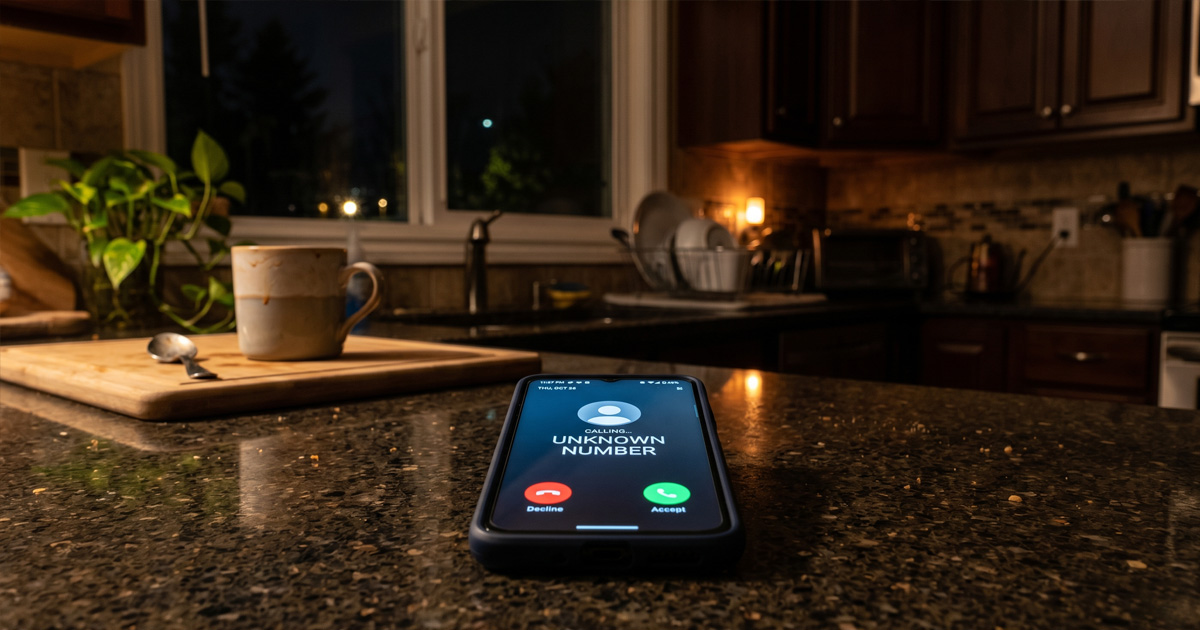
Most people see an unknown number on their phone and decline it. They assume it's a robocall, a scam, a wrong number. They go back to whatever they were doing.
In this life, you don't.
You pick up. You pick up with a particular feeling in your chest that the people around you don't have. The feeling has a half-second of pause in it, where your stomach drops a quarter-inch before your brain catches up. And the call is almost always nothing. A pharmacy reminder. A wrong number. A delivery driver. The relief comes in a wave, and you don't talk about it, and you go back to whatever you were doing too.
But the almost is the part that stays with you.
The shape of how you live
You learn it gradually. At first it's just a vague awareness. Then it becomes the quiet calculation you make every time the phone rings during the hours your person is on shift, on a deployment, on a callout, on the road. Eventually it becomes the way you live, and you stop noticing it the way you stop noticing any chronic background noise — the highway you live near, the train two blocks over, the hum of your own refrigerator.
It's not anxiety, exactly. It's a kind of attentive readiness that doesn't have a clean name. Other Defenders and their families recognize it instantly when you describe it. People outside the community look at you slightly funny, the way they do when you describe a kind of weather they've never lived in.
The small accommodations
You make accommodations to it without naming them. You keep your phone face-up at dinner instead of face-down. You text your spouse a quick "you good?" when you haven't heard from them by 3 a.m., even though you swore you wouldn't be that person. You have a particular ringtone for them so you know without looking. You answer your kids' calls on the second ring, always, because you remember being a kid yourself and not getting through to a parent.
You also build the small rituals that go the other way. The check-in text on the way home. The "made it" message that doesn't need a reply. The voice memo that's just thirty seconds of "today was okay." None of those are excessive. They're the protocols a household builds when one of its members is in a job where contact can stop suddenly and you don't always know why.
People who haven't lived this think those rituals are paranoia. They aren't. They're the cheapest possible insurance against the thing that, statistically, won't happen — but that you know happens to other families, because you've watched it happen to them.
The thing that happens once
Almost everyone who has been in this life for any real length of time has the story of the one time it was real. Not necessarily the worst-case version. But the time the phone call wasn't nothing. The time the chaplain showed up, or the sergeant, or the friend from the unit who shouldn't have been the one calling but was. The time the watch commander showed up at the door. The time your spouse was the one calling from a hospital landline because his phone broke in the wreck and he wanted you to know he was fine before someone else called and made it sound worse.
You only need it to happen once for the chest-tightening to become permanent. After that, it isn't anxiety anymore. It's pattern recognition with a foundation underneath it.
This is one of the things that's hardest to explain to people who haven't lived it. They want to argue you out of the response. They want to remind you of the statistics. They want to gently suggest that this isn't healthy. The statistics are right. The advice is well-meaning. It also misses the point. The chest-tightening isn't irrational; it's just expensive, and the cost is part of the cost of this life, and you've decided — usually a long time ago — that the cost is worth it.
What you do with it
You don't get rid of it. Not really.
What you do is build a life large enough that it doesn't run the show. You answer the phone when it rings, and most of the time it's nothing, and you put the phone down and finish the dishes. You build other things to think about. You let the moments of relief — when the truck pulls in, when the text comes through, when the unit lands — be actual relief, instead of just a return to baseline. You give yourself credit for the chronic vigilance you're doing in the background, even if no one else is going to.
And occasionally, when you find another person who knows the feeling — another Defender, another spouse, another parent of someone who serves — you say so out loud. You don't have to make a whole thing of it. You just say "yeah, I do that too." That recognition does more for the long-term carry than most therapy does.
You're not paranoid. You're a person who loves someone whose work has a small but real chance of being the kind of work it sometimes is. That isn't a flaw. That's a competent response to a real situation.
The phone is going to ring. Most of the time it's nothing. Once in a while, statistically, it's something. The fact that you pick up anyway, every time, knowing both of those things, is part of what it means to be in this life.
If you're reading this and you know what we're talking about — the small drop in the stomach, the half-second pause, the way you're already half-rehearsing what you'd do if it were real — we wrote this for you. You're not alone in the room. There are a lot of us doing this same quiet thing, in a lot of houses, in a lot of cars, in a lot of break rooms, all over the country.
Welcome.